
Specialist Technical Material Suppliers
Heat Treatment
Heat treatment changes the hardness, strength and toughness of metal by heating, holding and cooling it under control. Corrosion Resistant Mayfair supports buyers who need material in a stated condition, such as annealed, solution treated, aged (for example H1150), normalised or quenched and tempered.
an Insight to The Heat treatment process at CRM
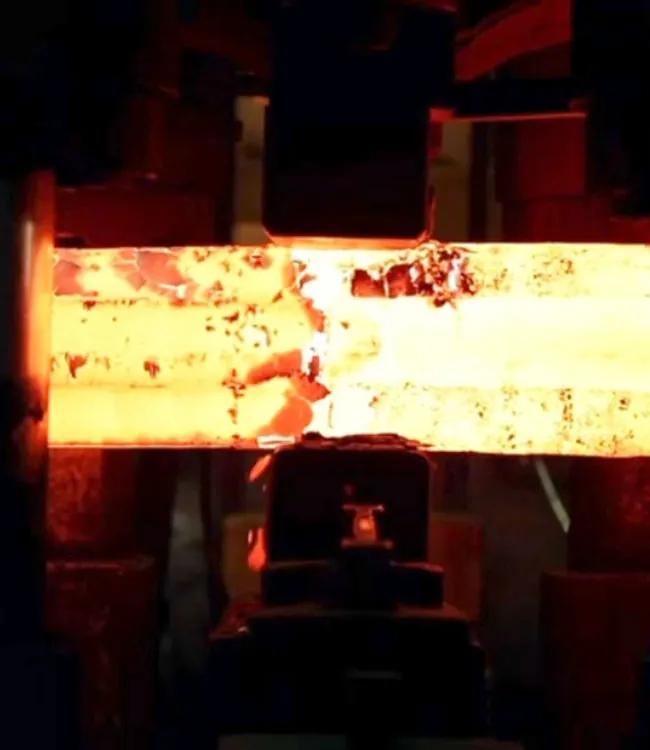
Heat treatment purpose
Heat treatment is a manufacturing process, heating metal to specific temperature then cooling it to harden the material. Can be used at different stages in the manufacturing process. Heat treatment makes the material stronger, durable, harder, ductile depending on what the material requires in order to perform properly.
- Hardening
- Annealing
- Tempering
- Case hardening
- Normalisation
Heat treatment is a process that involves heating and cooling metal materials in order to alter their physical and mechanical properties. It is used to harden, reduce brittleness, and improve machinability, as well as improve wear and fatigue resistance. It is used to restore damaged parts, transform their shape, or simply improve their overall appearance. Common techniques used in heat treatment include annealing, quenching, tempering, normalizing, and carburizing.
Technical specification treatments
It can take place in a furnace or by induction. The process typically involves the application of heat followed by a cooling process. During heat treatment, the material is heated to a particular temperature and held for a certain amount of time before cooling at a certain rate and temperature. It can cause permanent deformation of a material if it is not done properly and care must be taken when controlling the parameters and plays an essential role in the manufacturing and production process of metal components and products, resulting in improved performance and product life.
Heat treatment is typically used to enhance the hardness, strength, ductility and resistance to wear and corrosion in the metal. The three general heat treatment processes are Annealing, Tempering, and Quenching. Annealing is carried out to soften the metal, relieving any internal stresses created from machining which can cause the part to distort during machining.
Tempering is used to balance the strength and toughness of the metal. Quenching is used to harden the metal and make it more resistant to impact and wear. In addition to alloy characteristics, heat treatment has many other benefits such as stress relief, grain refinement, and improved dimensional stability.
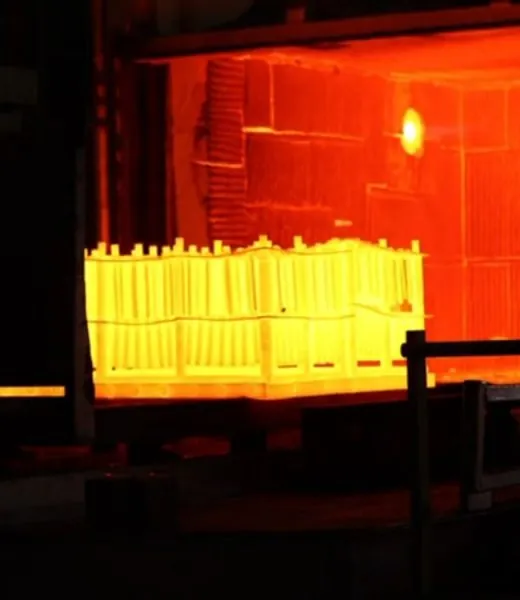
Conditions buyers ask for
- Annealed or solution annealed: softest condition, stainless and nickel alloys
- Aged / precipitation hardened: 17-4PH and 15-5PH conditions such as H900, H1025 and H1150; Alloy 718 solution treated and aged
- Normalised: low-alloy and carbon steel forgings and plate
- Quenched and tempered: 4140, 4130, 4145, 4330V, 8630 and 300M to a stated strength level in ksi or MPa
- Case hardening: surface hardening for wear resistance
State the condition, the standard (for example ASTM, AMS or API 6A) and any hardness or strength requirement when you enquire. We confirm the condition and the EN 10204 3.1 certificate with the quotation. See our testing and bars pages for related information.
Questions buyers ask
What is heat treatment?
Heat treatment heats metal to a set temperature, holds it, then cools it at a controlled rate to change hardness, strength, toughness or ductility.
What is the difference between annealing, normalising and quenching and tempering?
Annealing softens the metal and relieves stress. Normalising refines the grain and gives a more uniform structure. Quenching and tempering hardens the steel and then tempers it to balance strength and toughness.
What does a condition such as H1150 mean?
H1150 is an ageing condition for precipitation-hardening stainless steels such as 17-4PH. A higher H number gives lower strength and better toughness.
Can material be supplied in a stated heat-treated condition?
Yes, buyers specify the condition they need, such as annealed, solution treated, aged, normalised or quenched and tempered. State it with the standard when you enquire and we confirm it with the quotation.
Is a heat-treatment certificate available?
Tell us when you enquire what documentation you need. We confirm the certificate, for example EN 10204 3.1, with the quotation.
Related: round bar · forgings · testing · contact us
Ready to enquire? Send us the grade, standard, size and quantity through the contact page or write to sales@corrosionrm.co.uk. You can estimate a weight first with the metal weight calculator.
INdustries WE Specialize in
Aviation
Automotive
defence
marine
oil and gas
petrochemical
Engineering
Find out more about our works within these Specialized areas
We would like to express our pleasure...
“
We would like to express our pleasure in regards to the product quality and services that we consistently receive from Corrosion Resistant Mayfair Ltd. We have always appreciated the quick response that we get and the general way that they undertake their business is excellent. We often find ourselves recommending the firm to others based upon the satisfaction that they provide us every time.
ENGINEERING – Purchasing supply Chain Manager – MA.
speak to an expert
get in touch
Speak to an expert, or request a call back at a time that suits you!